
Stretching has been promoted for decades as the solution for tight muscles, stiff joints, and chronic pain. Yet many people stretch daily and still feel restricted, sore, or unstable. If stretching truly solved the problem, chronic pain would not be as common as it is today.
The missing piece is slow pressure.
Acupressure—especially when applied slowly and deliberately—works with the fascia and nervous system in a way stretching alone cannot. This is why ball acupressure, when used correctly, often creates deeper and longer-lasting relief than forceful movement or aggressive stretching.
The Stretching Myth
Stretching feels good in the moment, but sensation is not the same as change.
When fascia is cold, dehydrated, or irritated, pulling on it often triggers resistance instead of release. The body responds by tightening to protect itself. This protective response is one reason stretching can feel temporarily relieving yet fail to create lasting results.
Common signs stretching alone isn’t working:
- Tightness returns quickly
- Pain shifts to another area
- Stretching feels forced or guarded
- Relief lasts minutes instead of hours
Stretching asks tissue to lengthen before it is ready.
Fascia Responds to Pressure, Not Force
Fascia is not muscle. It is a connective tissue network that surrounds and supports muscles, nerves, and organs. It responds best to slow, sustained input, not rapid pulling.
Slow pressure:
- Increases tissue hydration
- Improves local blood flow
- Softens fascial density
- Allows layers to glide again
This is why acupressure works so well. Pressure gives fascia time to adapt instead of defend.
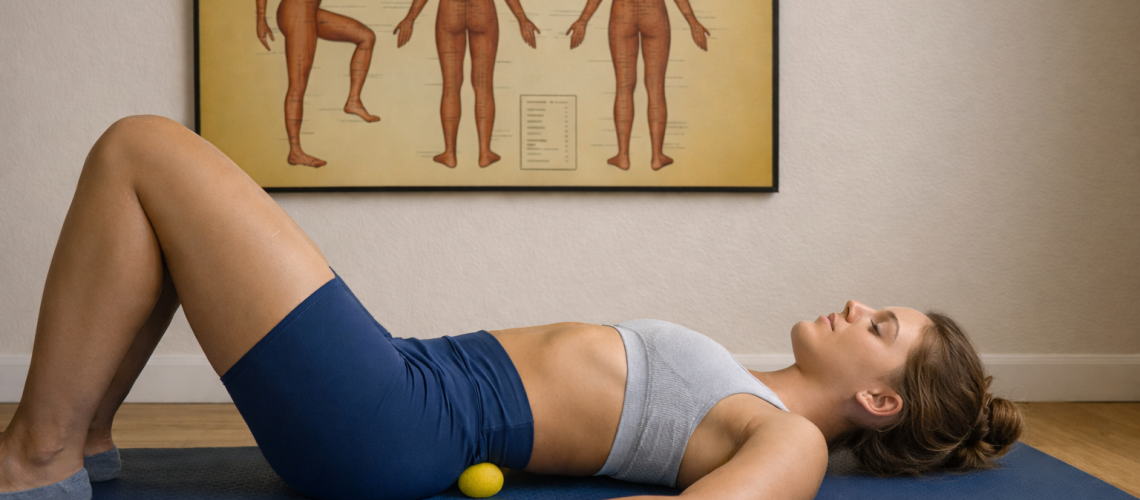
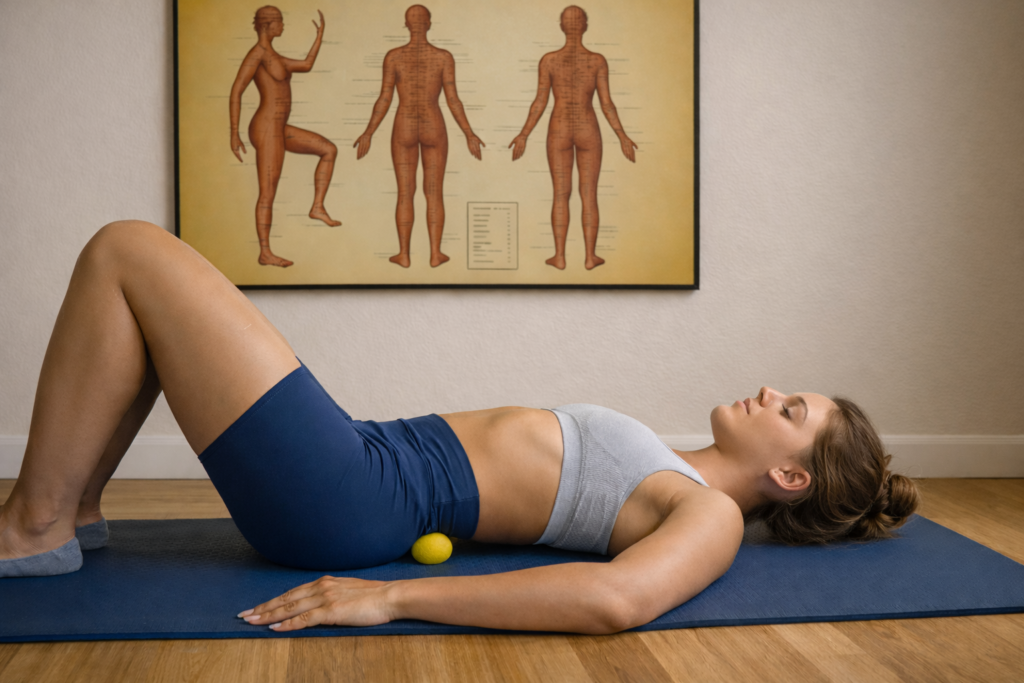
Ball acupressure adds another advantage: precision. A small ball can reach areas stretching cannot—deep hip rotators, spinal muscles, shoulders, and feet—without forcing range of motion.
The Nervous System Controls Muscle Release
Muscles do not relax because they are stretched. They relax when the nervous system decides it is safe to let go.
Fast movements and aggressive stretching often send a danger signal. Slow pressure sends the opposite message.
When pressure is applied gradually:
- The nervous system reduces guarding
- Muscles soften naturally
- Pain sensitivity decreases
- Movement becomes easier
This is why slow acupressure frequently creates a sense of warmth, melting, or spreading sensation—signs of improved circulation and nervous system regulation.
Why Ball Acupressure Works So Well at Home
Ball acupressure allows people to take control of their own healing between treatments.
Key advantages:
- Pressure is self-regulated
- Sessions can be short and effective
- Results build with consistency
- Easy to integrate into daily routines
Unlike stretching, ball acupressure does not require flexibility or strength. It works whether someone is athletic, sedentary, recovering from injury, or managing chronic pain.
This is the foundation of the AcupressureWorks system—simple tools, applied slowly, with clear intention.
Pressure First, Stretch Second
Stretching is not the enemy—it is simply out of order.
A more effective sequence is:
- Slow pressure first
- Gentle movement next
- Stretching last
Once fascia is warm, hydrated, and receptive, stretching becomes easier and more effective. Range of motion improves without force, and results last longer.
Many people find they need less stretching overall once acupressure becomes part of their routine.
How AcupressureWorks Fits Everyday Self-Care
AcupressureWorks was designed to give people a reliable way to support their body between acupuncture sessions, massage, or physical therapy.
The system teaches:
- Where to apply pressure
- How long to stay on a point
- How to breathe during release
- How to progress safely
Ball acupressure turns self-care into a repeatable, calming practice instead of a battle against tight muscles.
Final Thoughts
Stretching alone often asks too much from tissue that is not ready to change. Slow acupressure prepares the body first—by improving circulation, calming the nervous system, and restoring fascial glide.
When pressure comes before movement, the body responds with less resistance and more lasting relief.
If you want a simple, effective way to support pain relief and mobility at home, slow pressure acupressure may be the missing link.