

Fascia Ball Acupressure: Jim Oschman’s View of Tissue, Pressure, and Relief
If you have been following our recent fascia posts, you already know where this discussion is headed. We have been exploring how slow ball acupressure can help warm tissue, soften resistance, and create a different kind of relief than aggressive stretching or forceful pressure.
In this post, we take the next step.
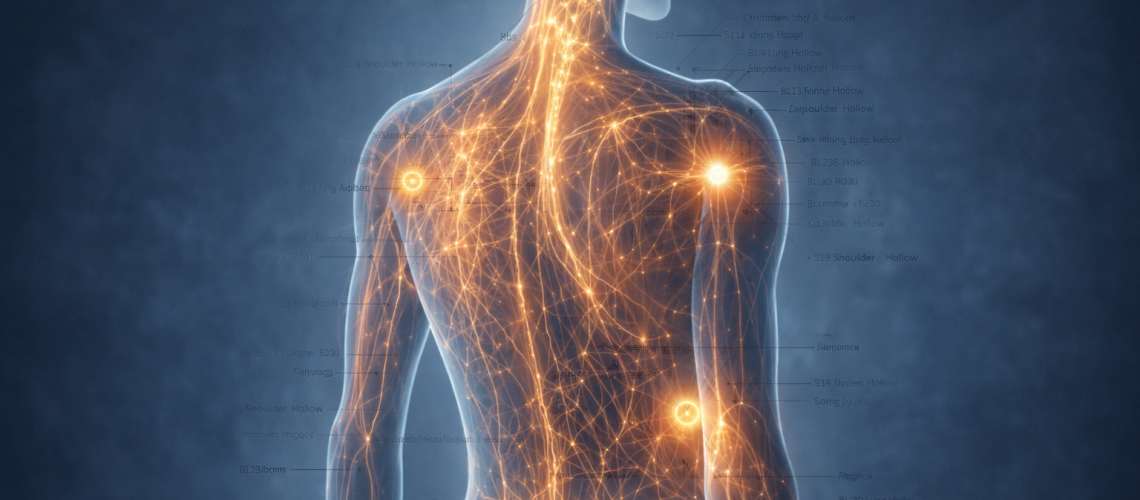
Instead of looking only at what fascia feels like when it is tight, rope-like, stubborn, or resistant, we ask a deeper question: What if fascia is more than wrapping material? What if fascia is part of a larger communication network throughout the body? Piezo Electricity and Facscia
That is where the work of Jim Oschman becomes especially interesting.
His perspective fits beautifully with what many people experience during ball acupressure.
Sometimes pressure is applied to one small area and the result is not just local. Breathing changes. The shoulders drop. The back feels freer. The hips feel less guarded. A small point creates a larger response. Why? Maybe because fascia is not just a wrapper. Maybe it is part of the conversation.
This Post Continues the Fascia Discussion
Earlier articles in this fascia series explored how warming tissue changes everything and why slow pressure ball acupressure may work better than stretching.
This post continues that same discussion, but with a broader lens.
Here, ball acupressure is viewed through Jim Oschman’s point of view. That gives readers another way to think about why slow, sustained pressure may create effects that feel bigger than the small area being pressed.
What Jim Oschman Adds to the Fascia Conversation
Jim Oschman’s contribution is important because it encourages us to stop thinking of fascia as dead packing foam. Instead, fascia can be viewed as part of a body-wide communication system.
That idea matters because it changes how treatment is understood.
If fascia is just wrapping material, then pressure is just pressure.
But if fascia is part of a body-wide network, then a carefully applied pressure may be doing much more than digging into a sore muscle. It may be influencing a larger pattern of tension, force transfer, sensation, and body awareness.
That is one reason ball acupressure often surprises people.
They start by working on the upper back and suddenly the chest feels more open. They work into the glutes and the low back feels less stuck. They release the foot and the whole back chain seems calmer. It feels almost mysterious until we remember that the body is not built in disconnected pieces.
It is built as a web.
Fascia Is Not Just Structure. It Is Relationship.
One of the biggest mistakes people make is to think of the body as a stack of separate parts. Neck over shoulders. Shoulders over ribs. Ribs over low back. Low back over hips. It sounds neat and simple, but the body is not a pile of bricks.
It is more like a spider web.
Pull one part of the web and the rest of the web feels it.
That is why fascia matters so much. Fascia links regions together. It helps distribute force, maintain continuity, and support coordinated movement.
For those of us who use ball acupressure, that makes practical sense.
It helps explain why a small ball placed on the right spot can create a change that feels larger than the point itself.
Fascia Ball Acupressure: Slow Pressure, Warm Tissue Relief
If fascia is responsive, connected, and body-wide, then technique matters.
And this is where slow ball acupressure shines.
Fast, aggressive work often makes the body tighten up in self-defense. It is like trying to calm a frightened horse by yelling louder. That usually does not work. The body needs a reason to trust the pressure.
Slow pressure gives the tissue time to respond.
That is one reason the earlier discussion of why slow pressure ball acupressure may work better than stretching fits so naturally into this topic. Slower, sustained input may allow the tissue and the nervous system to soften rather than brace.
Ball acupressure does not have to be violent to be effective. In fact, it often works better when it is not.
Why Warming Tissue Still Matters
This fascia series has already emphasized an important practical point: warming tissue changes everything.
When tissue warms, it usually feels more pliable, more responsive, and less defensive. Anyone who has worked with tight muscles and fascia already knows this from experience. Cold, guarded tissue resists. Warm tissue cooperates.
Ball acupressure can help create that shift.
Not by forcing tissue to surrender, but by encouraging circulation, improving local awareness, and helping the body let go of protective tension patterns. In that sense, warming tissue is not just a comfort issue. It is often the doorway to better movement and better outcomes.
So this post does not replace the earlier ones. It deepens them.
Earlier we said: warm tissue responds better.
Now we add: fascia may respond this way because it is part of a larger body-wide system.
What This Means for Ball Acupressure in Real Life
This is not just theory. It affects how people practice.
If fascia is seen as passive, tight tissue is often attacked with force.
If fascia is seen as responsive and connected, treatment becomes more precise.
That changes everything.
Instead of forcing, we listen
Enough pressure is used to engage the tissue, but not so much that the body braces.
Instead of rushing, we wait
A point is held long enough for the tissue to answer back.
Instead of random rolling, we use purpose
The ball is applied to meaningful acupressure areas and the body is allowed to respond in sequence.
Instead of treating one sore spot in isolation, we think in patterns
The back, hips, shoulders, feet, and breath all relate to each other.
That is why ball acupressure is more than a shortcut version of massage. Used well, it becomes a smart and targeted method of self-care.
Learn the Complete Ball Acupressure Routines
While a few simple pressure points can be helpful, real progress usually comes from using a structured routine. That is where proper ball placement, timing, body position, and point selection all work together. In other words, it is not just about pressing on a sore spot and hoping for the best. It is about using a system.
Our Ball Acupressure techniques are designed to do exactly that.
In the Acupressure Works book and our instructional Ball Acupressure videos, readers can learn precise routines for different problem areas, including the back, hips, shoulders, hamstrings, and other common tension patterns that are often linked to fascial restriction. These routines help take the guesswork out of self-treatment and show how to use ball acupressure in a safe, practical, step-by-step way.
What You Will Learn in the Full Routines
• exact ball placement
• how long to stay on each point
• how to position the body for best results
• which areas to combine in sequence
• how to use ball acupressure for ongoing maintenance and relief
Why Structured Routines Matter
A random technique may bring temporary relief. A precise routine is more likely to create lasting change. Think of it like the difference between tapping a few keys on a piano and actually playing a song. One is random. The other follows a pattern that works.
If readers want to go beyond general tips and learn the actual methods, they can explore the full Ball Acupressure routines in the books and videos here:
Acupressure Works Ebook: https://acupressureworks.com/product/acupressure-works-ebook/
Complete Ball Acupressure Video Collection: https://acupressureworks.com/product/all-acupressure-instructional-videos-digital-download/
All Acupressure Instructional Products Bundle: https://acupressureworks.com/product/all-acupressure-instructional-products-bundle/
How This Post Fits with the Earlier Fascia Posts
This is the simplest way to see the flow of the series:
Earlier posts
- fascia responds to pressure
- slow pressure may work better than stretching
- warming tissue changes the way tissue feels and functions
This post
- fascia may be part of a larger communication network
- ball acupressure fits that model surprisingly well
- precise pressure may create broader effects because the body is connected
That makes this post a natural continuation, not a repetition.
Where This Leaves Us
The more fascia is studied, the less it looks like passive wrapping and the more it looks like a living, responsive part of the body’s larger conversation.
Earlier blog posts in this fascia series already moved in that direction by focusing on warm tissue, slow pressure, and the practical benefits of ball acupressure.
Jim Oschman’s viewpoint helps take that one step further.
If fascia is part of a body-wide communication system, then ball acupressure is not just a way to mash sore spots. It becomes a way to work intelligently with the body’s connective web. That is a very different mindset. And for many people, it may help explain why slower, more precise pressure works so much better than force.
Conclusion
This fascia discussion is worth continuing because each layer adds something useful. First, the focus was on why warming tissue matters. Then came the idea that slow pressure often works better than stretching. Now, with Jim Oschman’s perspective, fascia can be seen in a broader way: not as mere wrapping material, but as part of a living, connected system throughout the body.
That idea gives ball acupressure even more meaning.
Small pressure. Smart placement. Bigger response.
Sometimes that is exactly how real change begins.
FAQs
1. Who is Jim Oschman and why mention him in a fascia article?
Jim Oschman is known for describing fascia as part of a body-wide communication system. His perspective helps explain why local pressure may create wider effects throughout the body.
2. How does this post connect to the earlier fascia posts on Acupressure Works?
Earlier posts in this fascia series explored warm tissue relief, slow pressure, and the benefits of ball acupressure for fascia. This post continues that discussion by adding Jim Oschman’s broader connective tissue viewpoint.
3. Is ball acupressure the same as foam rolling?
Not exactly. Ball acupressure is usually more targeted and more precise. It allows specific points and patterns to be worked instead of covering a broad area all at once.
4. Why does slow pressure often feel better than aggressive stretching?
Because slow pressure often gives the body time to adapt instead of defend itself. Many people find that sustained, tolerable pressure helps tissue soften more effectively than force.
5. Can these ball acupressure routines be learned at home?
Yes. The Acupressure Works book and ball acupressure videos were created to give readers clear, structured routines they can use at home.