
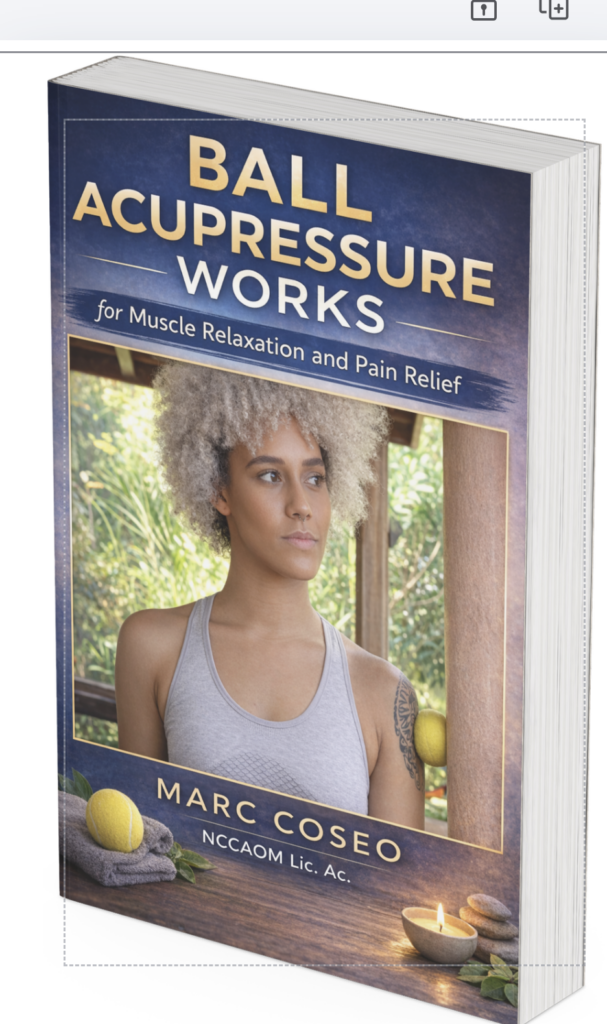
Ball Acupressure is one of the simplest and most practical homework tools we can give patients dealing with chronic or acute muscle and tendon problems. Whether a person is seeing a massage therapist, chiropractor, physical therapist, acupuncturist, or bodyworker, the real question is always the same: what happens between appointments?
A professional treatment can make a major difference. Muscles relax. Pain decreases. Movement improves. The nervous system calms down. But if the patient goes home and does nothing until the next appointment, the body may slowly return to the same old tension pattern.
That is where Ball Acupressure homework becomes so important.
With a simple tennis ball or therapy ball, patients can apply steady pressure to tight muscles, tender areas, and acupressure-related points at home. This helps support the treatment they already received. It also gives the body repeated reminders to relax, soften, and move better.
Marc Coseo has seen through clinical experience that when patients do Ball Acupressure two or three times a day, the healing process often improves significantly. Instead of waiting passively for the next session, patients become active participants in their own recovery.
For more background on this self-care method, patients can explore the main AcupressureWorks website
.
Why Ball Acupressure Is Powerful Homework
The best homework is not complicated. It is simple, repeatable, and easy enough for patients to actually do. That is why Ball Acupressure works so well.
Patients do not need expensive equipment. They do not need a gym. They do not need to memorize a long exercise routine. They only need a ball, a wall or floor, and clear instructions.
Think of treatment like opening a stuck door. The practitioner helps unlock it. Ball Acupressure homework helps keep that door from closing again.
Ball Acupressure Keeps the Treatment Working
After a massage, chiropractic adjustment, physical therapy session, or acupuncture treatment, the body is more open to change. Muscles may be warmer, joints may move better, and pain may feel reduced.
But life continues.
People sit at computers. They drive. They lift. They work. They sleep in strange positions. They carry stress in the shoulders, hips, back, and jaw.
Using Ball Acupressure at home helps maintain the improvement between appointments. It is like checking in with the body several times a day and saying, “Relax. Release. Let’s stay on track.”
What Is Ball Acupressure?
Ball Acupressure is a self-care technique where a person uses a ball to apply pressure to specific areas of the body. These areas may include tight muscles, trigger points, acupressure points, fascia restrictions, or tender spots related to pain and movement problems.
The ball acts like a simple pressure tool.
Patients can use Ball Acupressure:
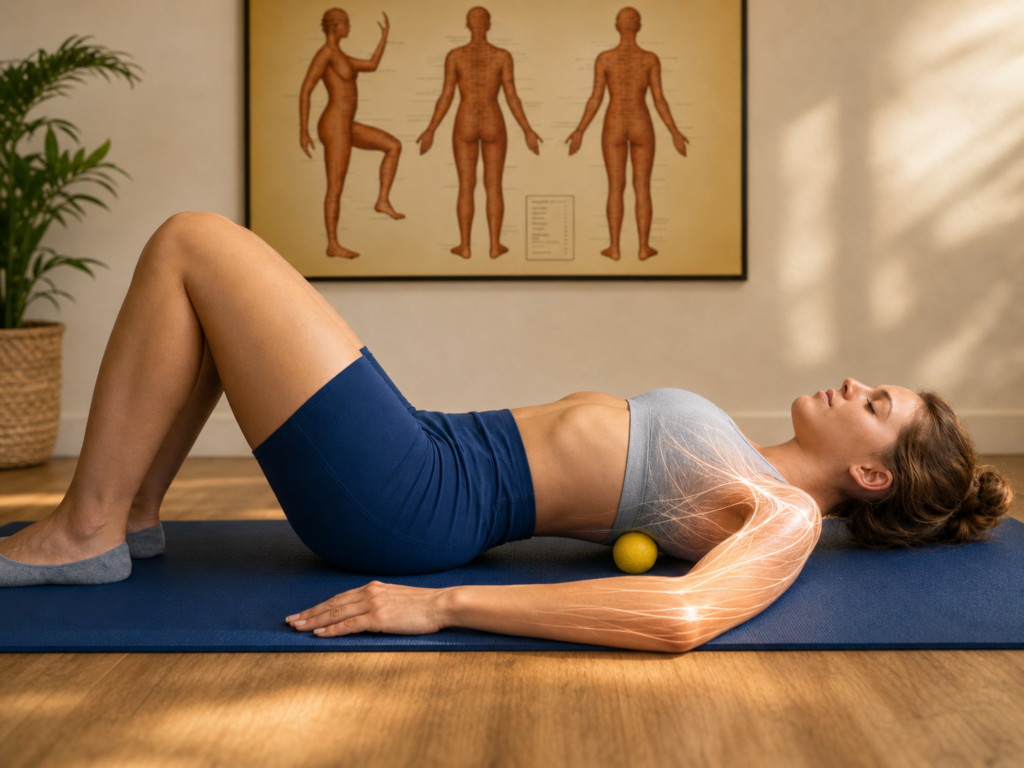
against the wall
lying on the floor
seated in a chair
under the foot
beside the spine
around the hips, glutes, shoulders, calves, and forearms
The goal is not to crush the tissue. The goal is to create steady, tolerable pressure that encourages the body to release.
Ball Acupressure Is Not Random Rolling
Many people think Ball Acupressure means rolling around quickly on a tennis ball. That is not the best method.
A better approach is to find a tender point, stay there, breathe, and allow the tissue to soften. Slow pressure usually works better than rushing. This idea connects well with the article Why Slow Pressure Ball Acupressure Heals Better Than Stretching
.
The Best Pressure Is Strong but Safe
Patients should feel a productive tenderness, not sharp pain. A good pressure level is usually around 5 to 7 out of 10.
If the patient holds the breath, clenches the jaw, tightens the shoulders, or feels worse afterward, the pressure is too much.
How Ball Acupressure Helps Muscle and Tendon Problems
Muscle and tendon problems often involve more than one structure. The tendon may hurt, but the muscle attached to that tendon may be tight, overworked, weak, guarded, or poorly supplied with circulation.
Ball Acupressure helps by working on the muscle and surrounding soft tissue that may be pulling on the tendon.
For example:
elbow tendon pain may involve tight forearm muscles
Achilles tendon irritation may involve tight calf muscles
shoulder tendon problems may involve the chest, upper back, and rotator cuff area
low back pain may involve the glutes, hips, and hamstrings
plantar fascia discomfort may involve the calves and sole of the foot
When muscles soften, tendons often receive less pulling stress.
Ball Acupressure Supports Circulation and Relaxation
Steady pressure can help increase body awareness, improve local circulation, reduce guarding, and calm overactive muscle tension. This is one reason Ball Acupressure can pair so well with massage, chiropractic care, physical therapy, and acupuncture.
For a deeper explanation of fascia and tissue response, see Fascia and the Benefits of Ball Acupressure
.
Ball Acupressure for Acute Problems
Acute problems are recent injuries or flare-ups. These may include a new back spasm, fresh shoulder strain, sudden neck tightness, recent tendon irritation, or a muscle that suddenly grabbed during activity.
With acute problems, Ball Acupressure must be gentle.
The goal is not to dig directly into the most painful area. Instead, we usually work around the problem to calm the surrounding muscles.
Examples of Acute Ball Acupressure Homework
For acute low back pain, we may work gently on the glutes and hips.
For acute shoulder tightness, we may work around the upper back and shoulder blade area.
For acute elbow irritation, we may work the forearm muscles instead of pressing directly into the sore tendon.
For acute foot pain, we may begin with the calves and use very gentle pressure under the foot.
When to Avoid Ball Acupressure
Patients should not use Ball Acupressure directly over:
fresh swelling
bruises
open wounds
infections
suspected fractures
severe unexplained pain
numb areas with poor sensation
If symptoms get worse, the patient should stop and ask their practitioner for guidance.
Ball Acupressure for Chronic Problems
Chronic muscle and tendon problems are different. These issues have often been present for weeks, months, or years. The body has learned the pain pattern.
That is why chronic problems usually need repetition.
Ball Acupressure homework works well for chronic pain because it gives the body repeated input. Instead of forcing a big change once per week, the patient creates small improvements several times a day.
Consistency Beats Intensity
For chronic problems, patients should not try to win a battle against the body. They should build a relationship with it.
A short Ball Acupressure routine done two or three times per day may be more helpful than one aggressive session done once in a while.
This is like watering a plant. A little water every day works better than flooding it once a month.
Marc Coseo’s Experience With Ball Acupressure Homework
Marc Coseo’s experience with patients has shown a clear pattern: when patients use Ball Acupressure as homework two or three times daily, they often improve faster.
This does not mean Ball Acupressure replaces professional treatment. It means Ball Acupressure supports it.
The practitioner starts the healing process. The patient continues it at home.
That combination can be powerful.
Why Two or Three Times a Day Works
The body responds to repetition. Muscles, fascia, nerves, and movement habits all learn through repeated signals.
A patient who does Ball Acupressure once a week may feel some benefit. But a patient who does Ball Acupressure two or three times daily gives the body consistent reminders to relax, soften, and move more freely.
Small actions, repeated often, create real change.
Why Massage Therapists, Chiropractors, and Physical Therapists Should Use Ball Acupressure Homework

Many practitioners already give patients stretching or strengthening exercises. Those can be excellent. But sometimes patients are too tight, guarded, or sore to stretch well.
Ball Acupressure can come first.
It helps prepare the tissue before stretching, strengthening, or corrective exercise. When the muscle releases, the next exercise often feels easier and more natural.
Ball Acupressure Helps Patients Take Responsibility
Patients often want to feel better, but they do not always know what to do at home. Ball Acupressure gives them a clear and practical tool.
It also helps them understand their own body.
They begin to notice:
which muscles are tight
which points refer pain
which areas soften with pressure
which movements improve afterward
how stress and posture affect symptoms
That awareness is part of healing.
7 Ball Acupressure Homework Tips for Patients
Here are seven simple Ball Acupressure homework tips that practitioners can give patients.
- Start With One or Two Points
Do not overwhelm the patient. Choose one or two important areas related to the main problem.
For neck pain, start with the upper back.
For low back pain, start with the glutes and hips.
For foot pain, start with the calves and sole of the foot.
- Use the Wall First
The wall gives more control than the floor. Beginners should usually start with the ball between the body and the wall.
This allows the patient to adjust pressure easily.
- Hold the Point, Then Breathe
The patient should find a tender point and hold steady pressure. Then they should breathe slowly.
Breathing helps the nervous system relax.
- Stay for 30 to 90 Seconds
Most points do not need a long time. A good starting range is 30 to 90 seconds per point.
The patient should wait for the tissue to soften, not force it.
- Avoid Sharp Pain
Ball Acupressure should feel therapeutic. It may feel tender, but it should not feel sharp, electric, burning, or alarming.
Pain is not the goal. Release is the goal.
- Repeat Two or Three Times Daily
This is the key habit.
For many patients, Ball Acupressure works best when repeated two or three times per day. Morning, afternoon, and evening is a simple rhythm.
- Recheck Movement Afterward
After Ball Acupressure, the patient should gently test movement.
Can the neck turn better? Does the shoulder lift more easily? Does the low back feel less stiff? Does walking feel smoother?
This helps the patient connect Ball Acupressure with real improvement.
Best Areas for Ball Acupressure Homework
Different patients need different points, but several areas are especially useful.
Upper Back and Shoulder Blades
This area is excellent for neck tension, shoulder tightness, computer posture, and upper back pain.
Patients with shoulder problems may also benefit from your Shoulder Pain Relief Ball Acupressure video
.
Glutes and Hips
The glutes and hips are important for low back pain, sciatica-like tension, hip stiffness, and hamstring tightness.
Your Hip & Sciatica Pain Ball Acupressure video
is a strong internal link here.
Calves and Feet
The calves and feet are useful for plantar fascia tension, Achilles tightness, foot fatigue, and lower-leg stiffness.
Forearms
The forearms are important for elbow pain, wrist tension, gripping problems, typing strain, and repetitive-use conditions.
Ball Acupressure, Fascia, and Body Awareness
Modern bodywork often talks about fascia, connective tissue, mechanoreceptors, and nervous system regulation. Traditional acupressure talks about points, channels, and energy flow.
Ball Acupressure connects both worlds.
It gives mechanical pressure to the body while also helping the patient slow down and feel what is happening inside.
For readers interested in the science side, link to Piezoelectricity and Fascia: How Pressure May Help Acupressure Work
.
Pressure Gives the Body Information
The body listens to pressure.
When pressure is too aggressive, the body protects itself.
When pressure is steady, safe, and well placed, the body may relax.
That is the art of Ball Acupressure.
How to Teach Ball Acupressure Safely
Practitioners should demonstrate Ball Acupressure before sending patients home with instructions.
Show the patient:
where to place the ball
how much pressure to use
how long to hold
how many times per day
what sensations are normal
when to stop
A short written homework sheet is ideal.
Keep the Instructions Simple
Patients do better when instructions are clear.
Instead of saying, “Work on your shoulder,” say:
“Place the tennis ball between your upper back and the wall. Find one tender point near the shoulder blade. Hold gentle pressure for 60 seconds while breathing slowly. Repeat two or three times per day.”
That is much easier to follow.
Helpful Internal Links for This Blog Post
Here are good internal links to place naturally inside this article:
AcupressureWorks Home
Complete Ball Acupressure Video Series
Fascia and the Benefits of Ball Acupressure
Why Slow Pressure Ball Acupressure Heals Better Than Stretching
Thoracic Outlet Syndrome Relief With Ball Acupressure
Piezoelectricity and Fascia
AcupressureWorks Shop
Conclusion: Ball Acupressure Helps Healing Continue at Home
Ball Acupressure is simple, but it can be powerful. It gives patients a practical way to support healing between appointments. It helps relax tight muscles, reduce guarding, improve body awareness, and support better movement.
For massage therapists, chiropractors, physical therapists, acupuncturists, and bodyworkers, Ball Acupressure is excellent homework because patients can actually do it.
And as Marc Coseo has seen in clinical practice, when patients use Ball Acupressure two or three times a day, they often heal faster and hold treatment results longer.
Professional treatment opens the door. Ball Acupressure homework helps keep it open.
FAQs About Ball Acupressure
- What is Ball Acupressure?
Ball Acupressure is a self-care method that uses a tennis ball or therapy ball to apply steady pressure to tight muscles, tender points, and acupressure-related areas.
- How often should patients do Ball Acupressure?
Many patients can benefit from doing Ball Acupressure two or three times per day, especially when guided by a massage therapist, chiropractor, physical therapist, or acupuncturist.
- Can Ball Acupressure help tendon problems?
Yes. Ball Acupressure may help tendon problems by relaxing the muscles that pull on irritated tendons and by improving soft tissue mobility around the painful area.
- Should Ball Acupressure hurt?
Ball Acupressure should feel tender but tolerable. Sharp, burning, electric, or worsening pain means the pressure is too strong or the point is not appropriate.
- What is the best ball for Ball Acupressure?
A tennis ball is usually best for beginners because it is firm but forgiving. Firmer balls can be used later if the patient has good control and tolerance.