
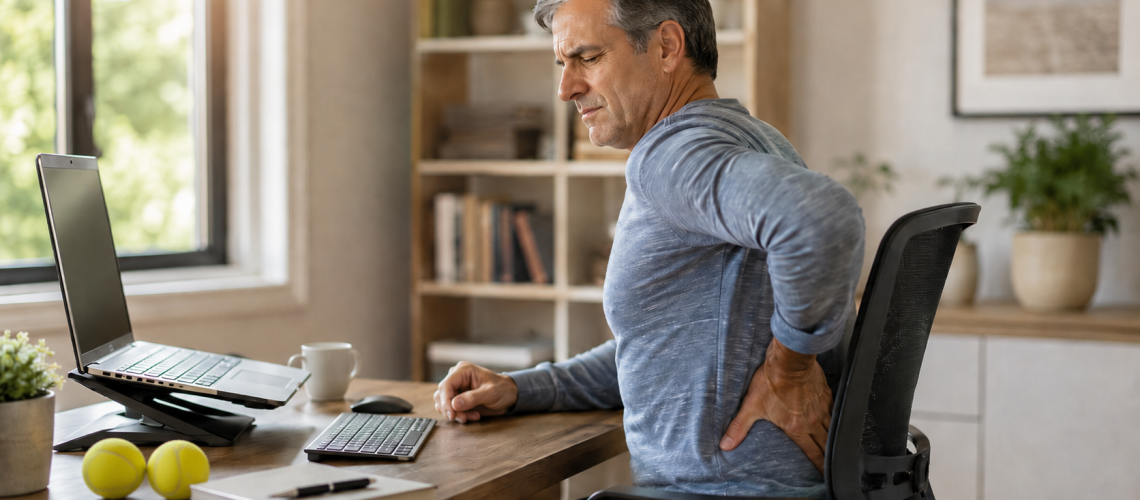
ball acupressure for low back pain

Ball acupressure for low back pain is especially useful when stiffness comes from sitting, tight hips, restricted glutes, and tense hamstrings.
Sometimes it does. But very often, especially with people who sit a lot, the low back is only where the pain is felt. The real problem may be coming from the muscles and fascia around the hips, buttocks, and hamstrings.
This is why stretching the low back does not always solve the problem.
When you sit for hours at a desk, in a car, or on a couch, the muscles around the pelvis can become short, tight, and restricted. The glutes stop working properly. The hamstrings become stiff. The hips lose mobility. The low back then has to compensate.
Over time, the low back becomes the victim of tension coming from below.
Ball Acupressure is a simple way to begin releasing that tension. Instead of forcing a stretch, you use steady pressure from a tennis ball, therapy ball, or acupressure ball to soften tight areas and improve circulation.
The goal is not to “roll around” aggressively or punish the painful area. The goal is to find the tight points, apply comfortable pressure, breathe, and let the tissue slowly release.
Why Sitting Can Cause Low Back Pain
Sitting changes the way your body carries tension.
When you sit, the hips are bent, the glutes are compressed, and the hamstrings are shortened. If this position becomes your normal daily posture, the body adapts to it.
The muscles around the pelvis may begin to feel tight, weak, or unresponsive. The low back may feel stiff when you stand up. You may notice pain when bending forward, getting out of a chair, walking uphill, or standing for long periods.
The problem is not always one single muscle. It is usually a pattern.
That pattern often includes:
Tight glute muscles
Tight piriformis and deep hip rotators
Restricted hamstrings
Tight hip flexors
Stiff fascia around the pelvis and low back
Poor circulation in the soft tissue
When these areas are restricted, the pelvis does not move freely. The low back then has to take more strain than it should.
This is why working only on the painful spot in the low back may give temporary relief but not solve the deeper tension pattern.
Don’t Chase the Pain
One of the most important ideas in Ball Acupressure is this:
The place that hurts is not always the place that needs the most attention.
For example, someone may feel pain across the low back, but the strongest tension may be in the buttock or hamstring. Another person may feel low back stiffness, but the deeper restriction may be in the side hip or piriformis area.
This is common because the muscles and fascia of the low back, hips, pelvis, and legs all work together.
Think of the low back as part of a larger support system. If the hips and hamstrings are tight, the low back has to work harder. If the glutes are restricted, the low back may try to stabilize the pelvis by itself.
The pain may be in the low back, but the cause may be spread through the entire hip and pelvic region.
That is why Ball Acupressure works best when you treat the surrounding areas, not just the painful spot.
Why Ball Acupressure Works Differently Than Stretching
Stretching can be useful, but many people stretch too hard or too quickly. When a muscle feels threatened, it may tighten instead of release. This is called the stretch reflex.
Ball Acupressure works differently.
With Ball Acupressure, you place the ball on a tight point and allow your body weight to create steady pressure. You are not forcing the muscle to lengthen. You are giving the tissue time to soften.
This pressure can help increase local circulation, reduce muscle guarding, and bring awareness to areas that have become tight or inactive.
The sensation should feel like a “good ache.” It should not feel sharp, electric, burning, or intense.
A good rule is:
Pressure should feel therapeutic, not threatening.
When the body feels safe, it is more likely to release.
The Low Back Pain Triangle
For low back pain from sitting, I like to think in terms of a triangle:
- The low back
- The glutes and buttocks
- The hamstrings and hips
If you only work on one corner of the triangle, you may miss the bigger pattern.
For example, tight hamstrings can pull on the pelvis. Tight glutes can restrict hip movement. Tight hips can force the low back to compensate. When all of these areas are tight, the low back often becomes overloaded.
Ball Acupressure gives you a way to work through this triangle slowly and intelligently.
You do not need to use a lot of force. You need to be precise, patient, and consistent.
Area 1: The Glutes and Buttock Muscles
The glutes are one of the most important areas to release when dealing with low back pain from sitting.
When you sit, the glutes are compressed for long periods. Over time, they can become tight, weak, or poorly activated. This can create tension around the pelvis and increase strain on the low back.
To work this area, sit on the floor or on a firm surface and place a tennis ball under one side of the buttock. Slowly shift your weight until you find a tender point.
Do not roll quickly.
Instead, pause on the point and let your body weight sink into the ball. Breathe slowly. Hold the pressure for 30 to 90 seconds, or until the tenderness begins to soften.
You can slightly change your angle by leaning a little to the side or turning the hip slightly. The goal is to search for the tight points, not to grind over the entire area.
When you find the right point, you will usually know it. It may feel tender, achy, or deeply tight.
That is where you wait.
Area 2: The Piriformis and Deep Hip Rotators
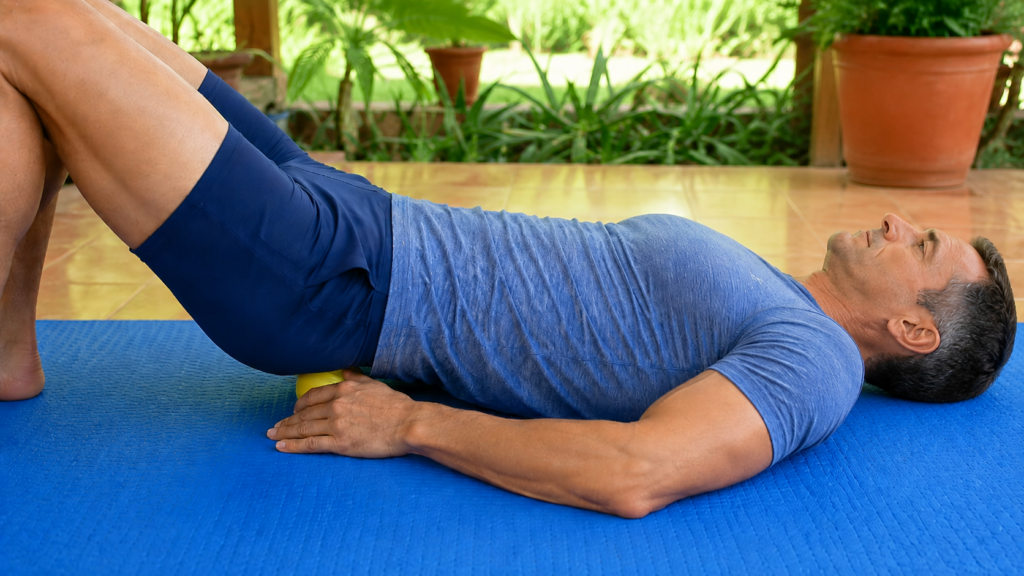
The piriformis and deep hip rotator muscles sit underneath the glute area. These muscles help rotate and stabilize the hip. When they become tight, they can contribute to buttock pain, sciatic-type discomfort, and low back tension.
This is one of the most useful areas for Ball Acupressure.
Place the ball slightly toward the outer buttock, not directly on the tailbone and not directly on the spine. Lean your body weight into the ball until you find a tender point.
If the sensation travels sharply down the leg, back off. You do not want to press aggressively into nerve pain.
The right sensation should feel like deep muscular pressure. It may be strong, but it should still feel safe and manageable.
Hold the point. Breathe. Let the muscle soften.
This area often responds better to slow pressure than to stretching. Many people stretch the piriformis repeatedly but never get lasting relief because the tissue is still guarded. Ball Acupressure can help calm that guarding response.
Area 3: The Hamstrings
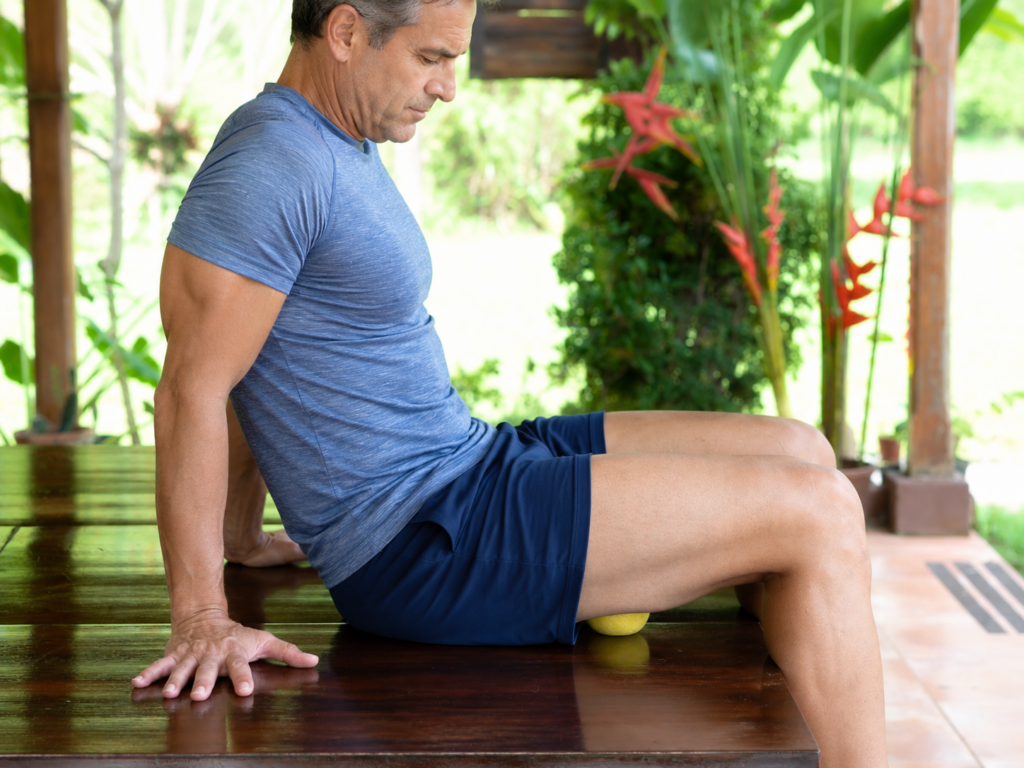
The hamstrings attach to the sitting bones and influence the position of the pelvis. When the hamstrings are tight, they can pull the pelvis backward and increase stress through the low back.
This is especially common in people who sit a lot.
To release the hamstrings, sit on a chair, bench, or firm surface and place the ball under the back of the thigh. Start near the upper hamstring, close to the sitting bone, but do not press directly on the bone itself.
Let the weight of the leg rest into the ball.
Slowly move the ball to different points along the hamstring. When you find a tender area, pause and hold. Again, do not roll quickly. The release comes from steady pressure and time.
You may also gently straighten and bend the knee while holding pressure on the ball. This creates a small movement through the tissue without forcing a stretch.
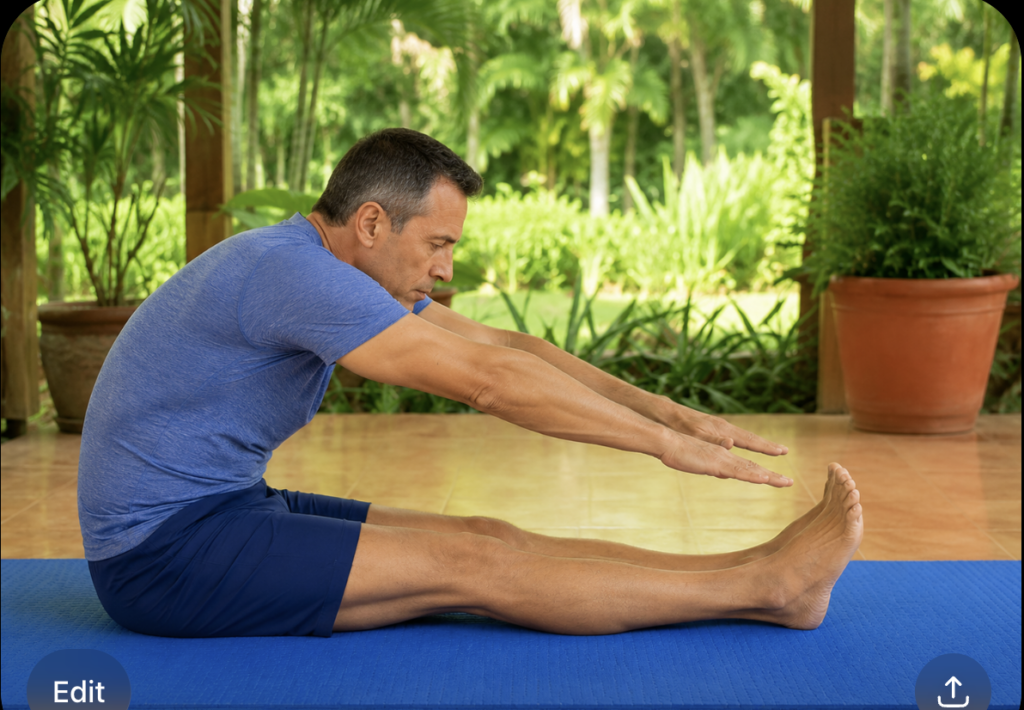
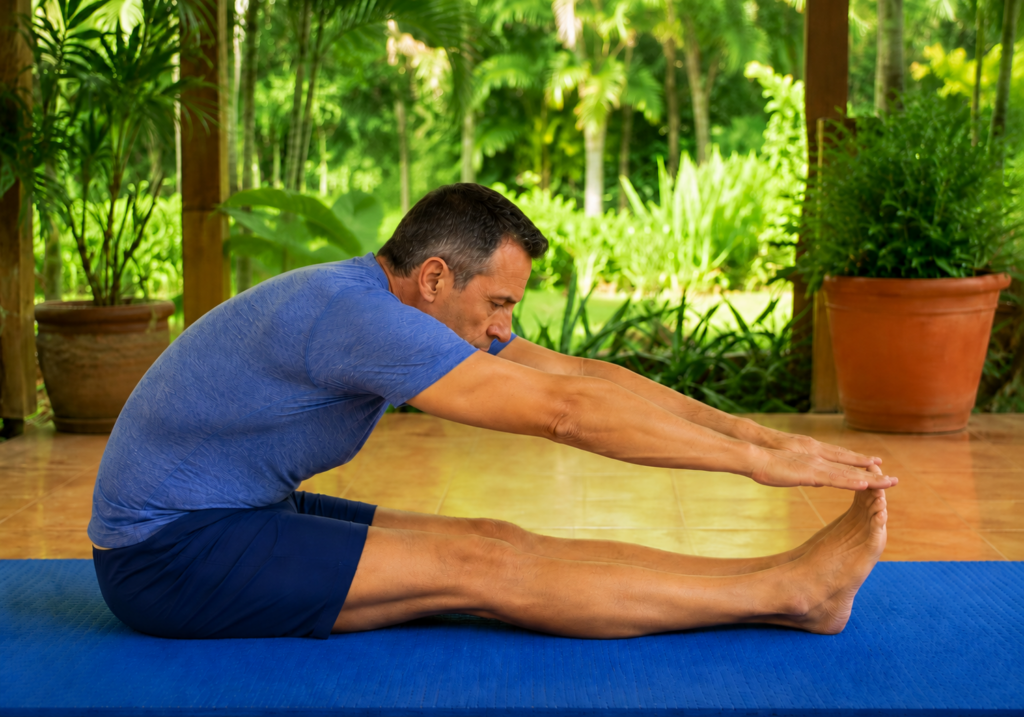
After releasing the hamstrings, stand up and check your forward bend or your walking. Many people feel an immediate change in low back tension after working the hamstrings.
Area 4: The Side Hip
The side hip is often overlooked.
The muscles along the outside of the hip help stabilize the pelvis when you stand, walk, climb stairs, or shift weight from one leg to the other. If these muscles are tight or weak, the low back may compensate.
To work the side hip, lie on your side with the ball between the outside of the hip and the floor. Use your arms and opposite leg to control how much pressure you apply.
This area can be sensitive, so start gently.
Find one tight point and hold. Do not force your full body weight onto the ball at first. Let the pressure build gradually.
The side hip can be especially helpful for people who feel low back pain on one side, hip tightness, or discomfort after walking or standing.
Area 5: The Low Back — Carefully
You can use Ball Acupressure around the low back, but you must be careful.Do not place the ball directly on the spine. Stay to the side of the spine, in the soft tissue. Use gentle pressure, especially at first.
For many people, it is better to start with the glutes, hips, and hamstrings before working directly near the low back. Once the surrounding areas begin to release, the low back may already feel less painful.
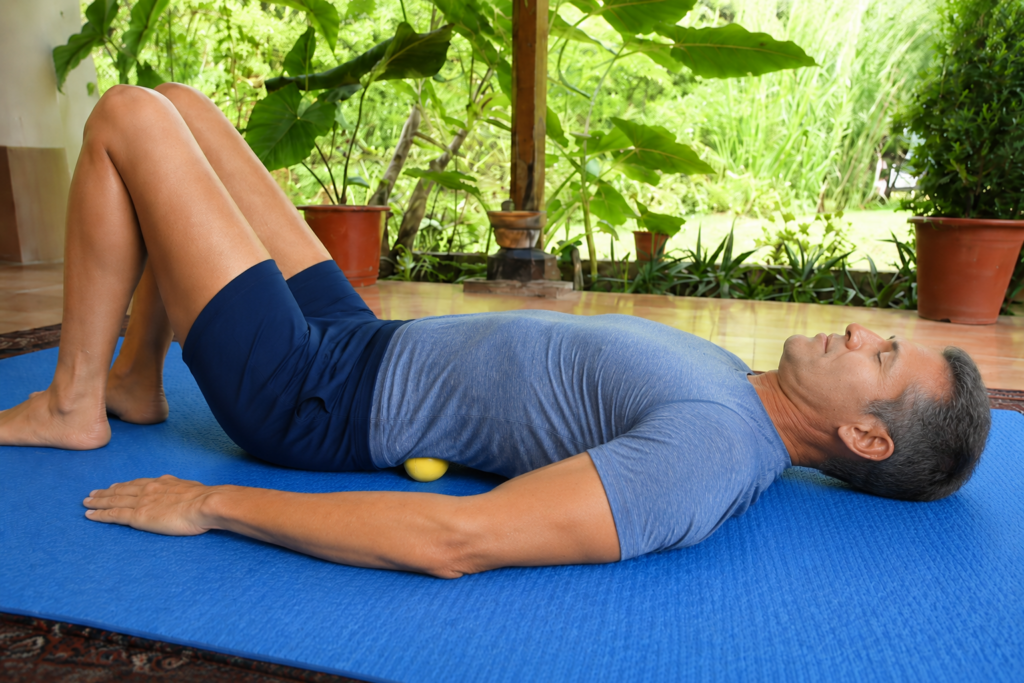
If you do work near the low back, lie on your back with knees bent and place the ball to one side of the spine. Keep the pressure comfortable. You can use a softer ball or place the ball against the wall instead of the floor to reduce intensity.
Remember, the goal is not to force the low back to release. The goal is to give the tissue a chance to relax.
How Long Should You Hold Each Point?
A good starting point is 30 to 90 seconds per point.
Some points release quickly. Others take longer. You do not need to stay on a point forever. When the sensation begins to soften, move to the next point.
The pressure should gradually become more comfortable. If the pain increases, becomes sharp, or causes numbness or tingling, stop and change position.
For most people, a short routine done consistently is better than a long routine done aggressively once in a while.
Try 5 to 10 minutes a day.
That may be enough to make a noticeable difference.
Use the Before-and-After Test
One of the best ways to know if Ball Acupressure is helping is to test your movement before and after.
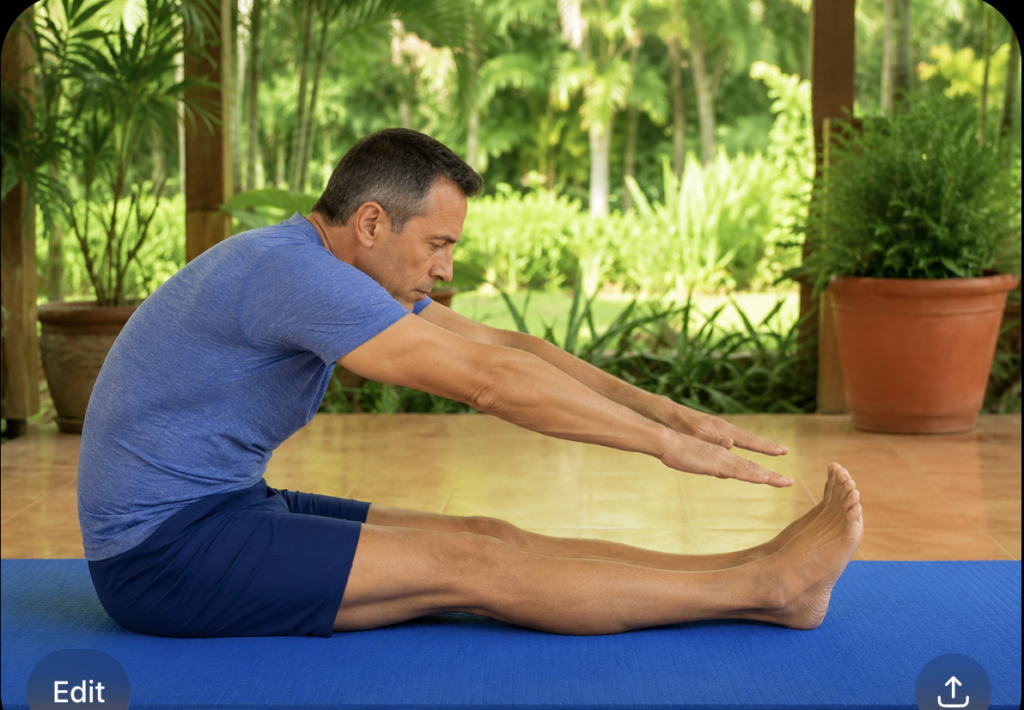
Before you begin, check one simple movement:
- Bend forward and notice how far you go
- Stand up from a chair and notice stiffness
- Walk across the room
- Turn your hips side to side
- Notice your low back pain level
Then do your Ball Acupressure routine.
Afterward, repeat the same movement.
Do not guess. Test it.
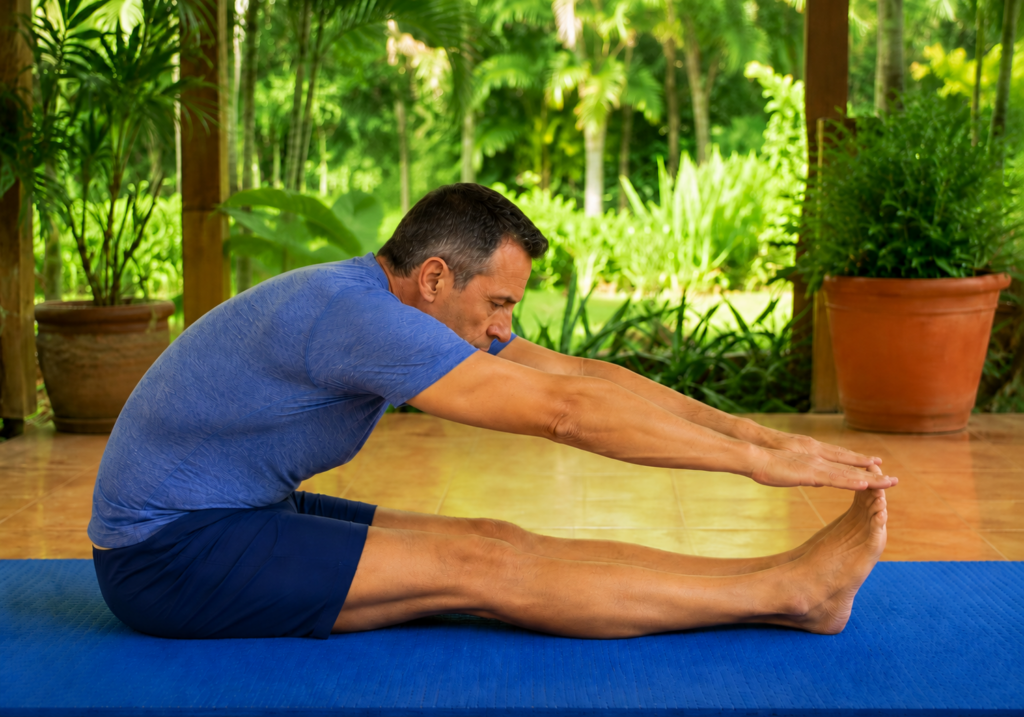
This before-and-after check teaches you which points are actually helping your body. You may discover that releasing the hamstrings improves your low back more than pressing directly on the low back. Or you may find that one glute point changes your hip movement immediately.
This is one of the most valuable parts of Ball Acupressure. It helps you learn your own body.
A Simple Low Back Pain from Sitting Routine
Here is a simple routine you can try:
- Glute point — 30 to 90 seconds each side
- Piriformis/deep buttock point — 30 to 90 seconds each side
- Hamstring point — 30 to 90 seconds each side
- Side hip point — 30 to 90 seconds each side
- Gentle low back point beside the spine — optional, only if comfortable
Move slowly. Breathe. Do not rush.
You are not trying to cover every inch of muscle. You are looking for the points that feel restricted and then giving them time to release.
What Should It Feel Like?
The right sensation usually feels like a deep ache, tenderness, or pressure.
Many people describe it as “good pain.” That means it feels intense but helpful.
The wrong sensation feels sharp, stabbing, electric, burning, or threatening.
Ball Acupressure should never feel like you are injuring yourself. More pressure is not always better. In fact, too much pressure can make the body guard and tighten.
Start lighter than you think you need. You can always increase pressure later.
When to Be Careful
Do not use Ball Acupressure directly over broken skin, bruises, tumors, infected areas, varicose veins, or recent surgical areas.
If you have severe back pain, pain after a fall or injury, loss of bowel or bladder control, numbness in the groin area, progressive weakness, unexplained weight loss, fever, or pain that travels strongly down the leg, seek medical evaluation.
Ball Acupressure is a self-care method for muscle and fascia tension. It is not a substitute for medical diagnosis or treatment.
Why This Method Fixes Low Back Pain from Sitting
Low back pain from sitting is often not just a low back problem. It is usually a whole pelvic tension pattern.
That is why Ball Acupressure can be so useful.
It allows you to work on the areas that influence the low back: the glutes, hips, hamstrings, and surrounding fascia. It helps you stop chasing the pain and start releasing the tension pattern that may be causing the pain.
The key is to go slowly.
Find the point. Hold steady pressure. Breathe. Wait for the tissue to soften. Then retest your movement.
This simple process can teach you a lot about your own body
If you want a guided routine, my Lower Ball Acupressure video walks you through the process step by step.
You will learn where to place the ball, how long to hold each point, how much pressure to use, and how to test your movement before and after.https://acupressureworks.com/product/lower-back-pain-relief-ball-acupressure-instructional-video-download/
Ball Acupressure is simple, but precision matters.
When you know where to place the ball and how to use your body weight correctly, you can often release tension that stretching alone does not reach.
Start with the hips. Release the glutes. Work the hamstrings. Then check the low back.
You may be surprised how much the low back changes when the rest of the pelvis begins to let go.