

Piezoelectricity and fascia may help explain why pressure from ball acupressure, acupuncture, massage, and stretching can create real changes in pain, tension, and movement.Imagine placing a tennis ball between your upper back and the wall.
FAQ
Is fascia really piezoelectric?
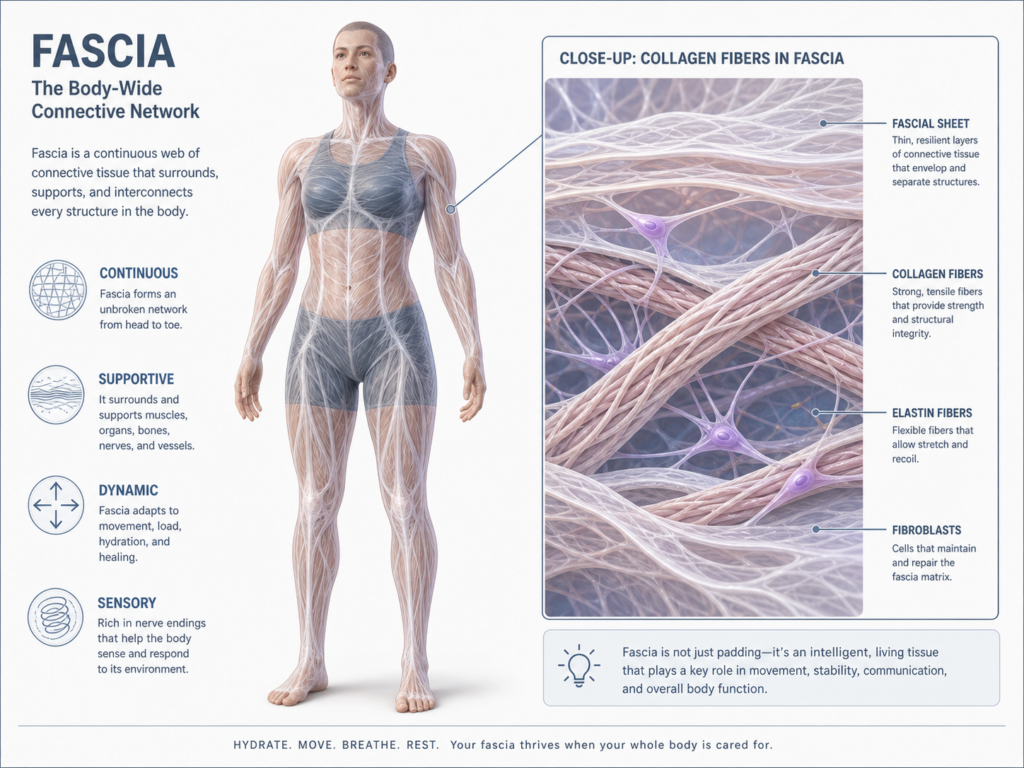
Fascia contains collagen, and collagen has been studied for its piezoelectric properties. This means collagen-rich tissue may create tiny electrical responses when pressed, stretched, or mechanically stressed.
Is acupressure the same as a piezoelectric fire sparker?
No. A fire sparker creates a strong spark. Acupressure creates subtle mechanical, nervous system, and tissue responses. The basic principle that pressure can create electrical activity is related, but the effect in the body is much gentler.
How does ball acupressure help fascia?
Ball acupressure applies steady pressure to tight muscles and fascia. This may help stimulate nerves, improve circulation, reduce guarding, and encourage better movement between fascial layers.
Does piezoelectricity fully explain acupuncture and acupressure?
No. It is one possible piece of the puzzle. Acupuncture and acupressure likely work through several mechanisms, including the nervous system, fascia, blood flow, pain modulation, and mechanotransduction.
You find a tender spot near the shoulder blade. At first, it feels sore. You breathe, relax your shoulders, and make small movements over the ball.
After 30 to 90 seconds, the sharp tenderness may begin to soften.
What changed?
The pressure stimulated sensory nerves.
The muscle began to relax.
The fascia received mechanical input.
Blood flow may have improved.
The nervous system started to feel safer.
Pain signals became less intense.
That is the body responding to pressure.
What Piezoelectricity Does — and Does Not
Piezoelectricity is a fascinating part of this story, but it is not the whole story.
It would be too simple to say:
“Acupressure works only because of piezoelectricity.”
The body is more complex than that.
A better way to say it is:
Piezoelectricity may be one part of how collagen-rich fascia responds to pressure.
Acupressure likely works through many systems at the same time:
Fascia
Nerves
Blood flow
Muscle tone
Pain modulation
Fluid movement
Mechanotransduction
Collagen’s subtle electrical properties
Together, these responses may help explain why pressure can create real changes in pain, stiffness, and movement.
The Takeaway
Fascia is not just wrapping around the muscles.
It is living, responsive, collagen-rich tissue.
When you apply pressure with a tennis ball, you may be stimulating fascia, nerves, blood flow, muscle tone, and the body’s own signaling systems.
Piezoelectricity gives us one fascinating clue: pressure can create electrical activity.
But in the body, this is not a spark like a gas lighter. It is a subtle biological response — one more reason why acupuncture, acupressure, massage, stretching, and movement can have such powerful effects.
The body listens to pressure.
Used correctly, ball acupressure gives the body a clear and helpful message:
Relax. Release. Move better.
Want to learn how to use a simple tennis ball for muscle relaxation and pain relief?
Visit AcupressureWorks.com to explore my Ball Acupressure books, videos, and acupoint charts.
Ball acupressure is simple, practical, and something you can do at home between treatments to help your body feel better.
Suggested Internal Links
Add links to:
Ball Acupressure Works book
AcupressureWorks video series
Male and female acupoint charts
Your fascia blog posts
Your shoulder pain or thoracic outlet syndrome blog post
Your tennis ball acupressure posts
Did you know pressure can create electrical activity?
That is the basic idea behind piezoelectricity. A barbecue lighter uses it to create a spark — but the body uses pressure in a much more subtle way.
Fascia is rich in collagen, and collagen may create tiny electrical responses when compressed or stretched.
This may help explain why acupuncture, acupressure, massage, stretching, and even a simple tennis ball can influence pain and tension.
Ball acupressure is not magic. It is pressure, fascia, nerves, blood flow, and the body’s own signaling system working together.
Read the full article at AcupressureWorks.com.