
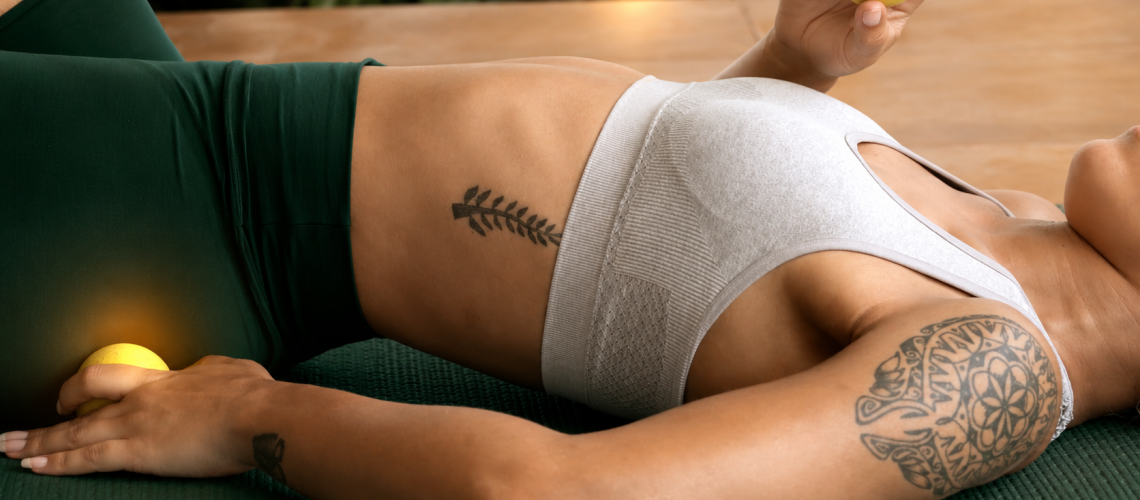
Hip pain and sciatica can make the simplest movements feel like a big project. Getting out of a chair, walking uphill, bending forward, or even sleeping on one side can suddenly feel uncomfortable. If you have ever felt pain traveling from your low back into your hip, buttock, or leg, you already know how frustrating it can be.
So what can we do before stretching, exercising, walking, practicing yoga, playing tennis, working in the garden, or doing any physical activity?
We can warm the muscles from the inside.
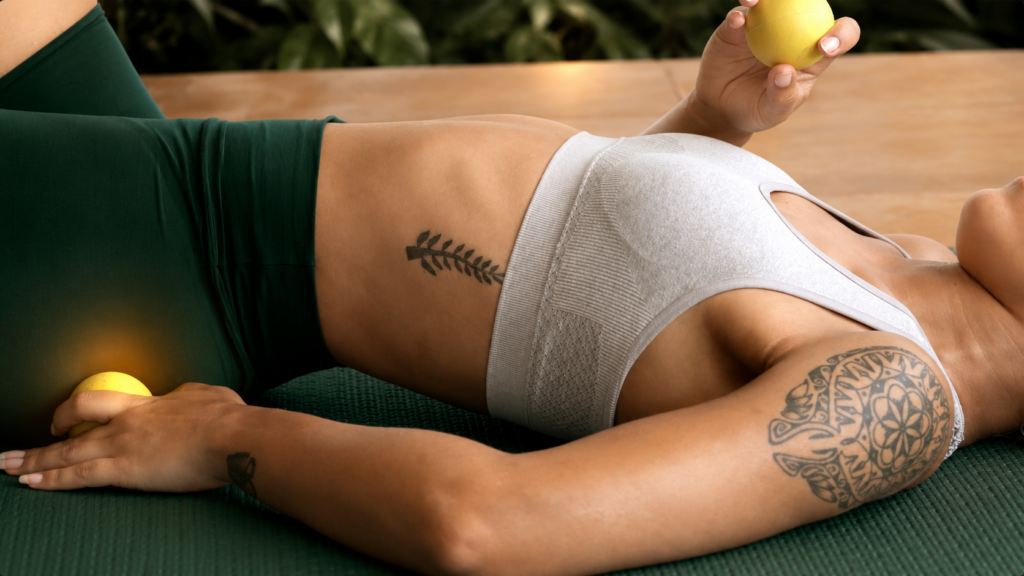
That is where ball acupressure for sciatica becomes useful. By using a simple tennis ball, we can apply steady pressure to tight hip and low back muscles. That pressure may help increase blood flow to muscle tissue. More blood flow can increase muscle temperature. Warmer muscles usually relax more easily, move more freely, and prepare the body better for activity.
Think of it like warming up an old garden hose in the sun. When it is cold, it feels stiff and resistant. When it warms up, it bends more easily. Your muscles are not exactly a garden hose, of course, but the idea is similar. Warm tissue often moves better than cold, guarded tissue.
Why Hip Pain and Sciatica Are So Common
Hip pain and sciatica are common because modern life almost trains the body to become tight.
We sit in cars. We sit at computers. We sit while eating. We sit while scrolling on our phones. Then we suddenly ask our hips, glutes, hamstrings, and low back to perform like athletes.
Is it any wonder the body complains?
The sciatic nerve travels from the low back area through the hips and down the leg. When muscles around that pathway become tight, irritated, or overworked, they can contribute to pain, pressure, burning, tingling, or that deep ache in the buttock and leg.
This does not mean every case of sciatica is “just a tight muscle.” Serious nerve problems need medical attention. But in many everyday cases, the muscles around the hip and low back are part of the story.
That is why ball acupressure for sciatica can be such a practical self-care method. We are not forcing the nerve. We are working with the surrounding muscles and fascia, helping them soften, warm, and release tension.
How Ball Acupressure Helps Increase Muscle Temperature
When we apply gentle, steady pressure to a tight muscle with a tennis ball, the body responds.
At first, the muscle may feel tender or guarded. But if the pressure is tolerable and we breathe into it, the body often begins to let go. Blood flow may increase into the area. As circulation improves, the muscle can become warmer, more relaxed, and more flexible.

This is one of the main reasons ball acupressure works so well before activity.
Cold muscles are like cold butter. Try spreading cold butter on toast and it tears everything apart. Warm butter spreads smoothly. Muscles are similar. When they are cold and tight, stretching can feel forced. When they are warmer and better supplied with blood, movement becomes easier.
That is why we can use acupressure points and ball pressure to help increase muscle temperature before exercise, sports, yoga, walking, lifting, or daily movement.
Why Warm Muscles Move Better
A warm muscle is usually a happier muscle.
When muscle temperature increases, the tissue often feels less stiff. Movement becomes smoother. The nervous system may feel safer allowing a greater range of motion. Flexibility improves not because we forced the body, but because we prepared it.
This is important.
Many people stretch too aggressively when their muscles are still cold. They pull, bounce, strain, and hope the body will surrender. But the body does not like being bullied. Tight muscles often tighten more when they feel threatened.
Ball acupressure takes a different approach.
Instead of pulling on the muscle from both ends, we apply direct pressure into the tight area. We wait. We breathe. We let the body soften. It is more like knocking politely on the door instead of kicking it open.
That is the beauty of ball acupressure for sciatica and hip pain. It gives the body a chance to relax before movement begins.
Ball Acupressure vs. Stretching: Why Pressure Comes First
Stretching has value. We are not throwing stretching out the window.
But for many people with hip pain, sciatica, low back tension, or tight hamstrings, stretching alone may not be enough. Sometimes stretching pulls on tissue that is already irritated. Sometimes it creates temporary relief but does not reach the deeper knots and trigger points.
Ball acupressure can help prepare the muscle before stretching.
Here is a simple way to think about it:
The Better Order
Apply ball acupressure first
Increase circulation and muscle temperature
Let the muscle relax
Then stretch gently
Then move, walk, exercise, or train
This order makes sense. We soften the tissue first. Then we ask it to lengthen.
For hip pain and sciatica, this can be especially helpful because the deep muscles of the buttock and hip can be stubborn. They do not always respond to a quick stretch. They often need slow pressure, patience, and careful positioning.
The Tennis Ball Method for Hip Pain and Sciatica
The tennis ball is simple, inexpensive, and easy to control. That makes it perfect for beginners.https://acupressureworks.com/product/hip-buttock-pain-relief-ball-acupressure-instructional-video-download/
For sciatica-like hip tension, start with the ball against the wall. This gives you more control than lying on the floor with your full body weight pressing into the ball.
Basic Wall Method
Stand with your back or side near a wall. Place a tennis ball between the wall and the tight area of your hip or buttock. Slowly lean your body weight into the ball. Do not push hard. Start gently.
Move slowly until you find a tender but tolerable spot. Stay there and breathe.
Use a pressure level that feels like “good discomfort,” not sharp pain. You should be able to relax into it. If you are holding your breath, clenching your jaw, or making a face like you just stepped on a nail, back off.
Stay on one point for 20 to 60 seconds. Then move slightly to another nearby point.
This is not a race. Slow is the secret.
Where to Use Ball Acupressure for Sciatica
For hip pain and sciatica, we usually focus on the muscles around the low back, buttock, side hip, and upper hamstring area.
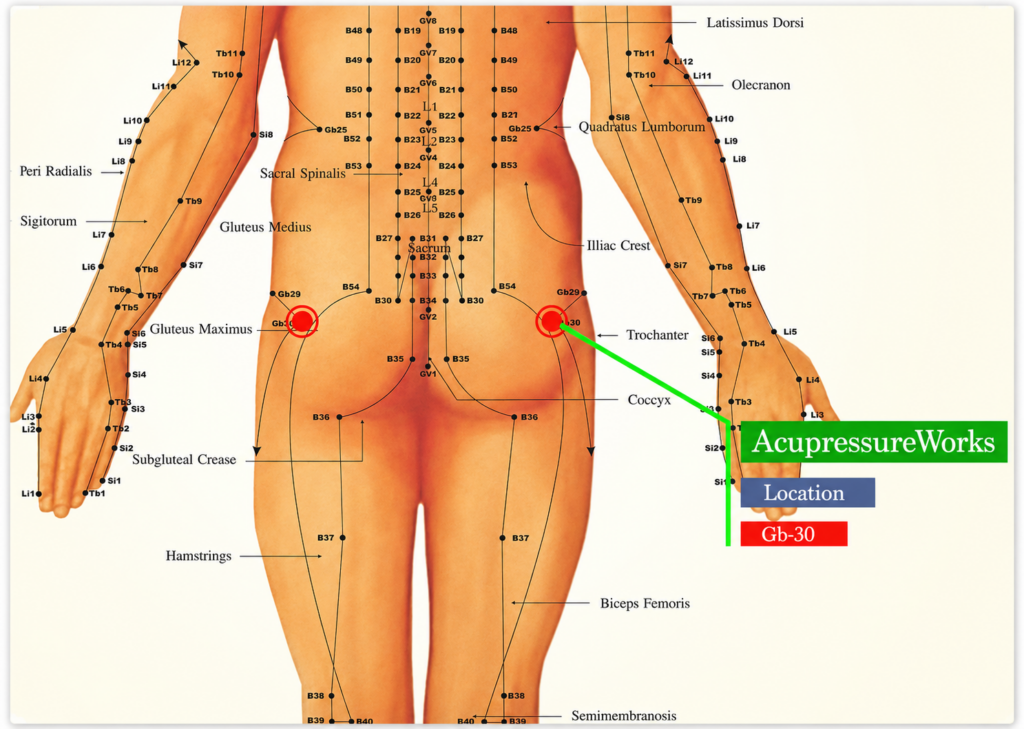
Helpful Areas to Explore
The glute muscles
The piriformis area
The side of the hip
The upper hamstring area
The low back muscles beside the spine
The outer hip and deep rotator muscles
Avoid These Areas
Do not press directly on the spine
Do not press directly on the tailbone
Do not press into sharp nerve pain
Do not press into numbness or burning
Do not force pressure into an area that makes symptoms worse
The goal is not to attack the pain. The goal is to communicate with the muscle.
A tennis ball is not a hammer. It is more like a conversation starter.
How Ball Acupressure Prepares the Body for Physical Activity
Before any physical activity, the body needs preparation. Muscles need blood flow. Joints need motion. The nervous system needs to feel ready.
Ball acupressure can be used as a warm-up tool because it helps wake up the tissue. When we apply pressure to tight muscles, we encourage circulation. With increased circulation, muscle temperature may rise. As the muscle warms, it often becomes more relaxed and flexible.
This can be helpful before:
Walking
Yoga
Tennis
Golf
Gardening
Weight training
Hiking
Running
Stretching
Physical therapy exercises
Daily chores
If your hips are tight before activity, your low back often has to work harder. If your glutes are guarded, your hamstrings may overwork. If your hip rotators are stiff, your stride can become shorter and less natural.
Everything is connected.
Ball acupressure gives those tight areas a chance to loosen before you ask the body to perform.
Why the Hip Muscles Matter So Much
The hips are the body’s crossroads.
The low back, pelvis, legs, and core all meet around this area. When the hip muscles are tight, the whole body can feel off balance. It is like having one sticky wheel on a shopping cart. The cart still moves, but everything feels harder than it should.
The deep hip muscles help stabilize the pelvis. They help control walking, turning, bending, and standing. When they become tight or irritated, they can contribute to low back pain, hip pain, and sciatica-like symptoms.
This is why ball acupressure for sciatica is not just about pain relief. It is about better movement. It is about helping the body feel prepared instead of protected.
A protected body tightens.
A prepared body moves.
A Simple 5-Minute Ball Acupressure Warm-Up
Here is a simple routine you can try before walking, stretching, yoga, or exercise.https://acupressureworks.com/product/acupressure-warm-up-ebook/
Step 1: Glute Release
Place the tennis ball between the wall and your buttock muscle. Lean gently into the ball. Find a tender area and hold for 30 seconds. Breathe slowly.
Step 2: Side Hip Release
Turn slightly so the ball presses into the side of the hip. Keep the pressure mild. Hold for 20 to 40 seconds.
Step 3: Upper Hamstring Release
Place the ball under the upper back part of the thigh while sitting on a firm chair. Gently shift weight onto the ball. Do not press into sharp nerve sensations.
Step 4: Low Back Muscle Release
Place the ball beside the spine, not on the spine. Lean into the wall gently. Hold and breathe.
Step 5: Gentle Movement
After the pressure work, walk around the room. Notice the difference. Then stretch gently if it feels right.
This whole routine can take five minutes. That is the point. It is simple enough to actually do.
How Much Pressure Should We Use?
Use less pressure than you think.
Many people believe deeper is better. Not always. With ball acupressure, too much pressure can cause the body to guard. If the muscle feels attacked, it may tighten more.
A good pressure level should feel therapeutic, not threatening.
Use this simple scale:
Pressure Guide
1–3: Too light, barely noticeable
4–6: Good therapeutic pressure
7: Strong but still tolerable
8–10: Too much, back off
Stay around a 4 to 6 when starting. You can always increase later.
Remember, the goal is to invite the muscle to relax. We are not trying to win a wrestling match with the tennis ball.
When Ball Acupressure Is Not Enough
Ball acupressure can be helpful, but it is not a replacement for medical care.
Stop and seek professional help if you have severe pain, worsening symptoms, numbness, muscle weakness, loss of bladder or bowel control, unexplained weight loss, fever, trauma, or pain that does not improve.
If pain travels strongly down the leg or gets worse with pressure, do not force the technique.
Self-care should make you feel better, not more alarmed.
How Ball Acupressure Fits With Acupressure Points
Traditional acupressure works with specific points along the body. Ball acupressure takes that idea and makes it easier to apply pressure to larger muscle areas, especially around the hips, back, and legs.
Instead of using only a finger or thumb, we use a tennis ball to create steady pressure. This can be easier on the hands and more effective for larger muscles.
For hip pain and sciatica, we are often working around areas that overlap with important acupressure pathways of the low back, buttock, hip, and leg. The intention is simple: improve circulation, reduce tension, increase muscle temperature, and help the body prepare for movement.
That is why ball acupressure is such a useful bridge between traditional acupressure and modern self-care.
Why Ball Acupressure Works Well as Homework Between Treatments
If you receive acupuncture, massage, physical therapy, chiropractic care, yoga therapy, or bodywork, what happens between appointments matters.
The body needs reminders.
Ball acupressure can be used as homework to help maintain progress. Instead of waiting until the pain builds again, you can spend a few minutes each day warming and softening the tight areas.
This is especially helpful for hip pain and sciatica because daily habits often recreate the tension. Sitting, driving, bending, lifting, and stress can bring the same patterns back.
A few minutes with a tennis ball can help interrupt that cycle.
It is not complicated. It is not expensive. It does not require a machine. It simply requires awareness, consistency, and patience.
Conclusion
Ball acupressure for sciatica is a simple, practical way to help warm tight hip and low back muscles before stretching, exercise, or daily activity. By applying steady pressure with a tennis ball, we may help increase blood flow to muscle tissue, raise muscle temperature, and encourage the body to relax. When muscles are warmer and less guarded, they often become more flexible, more responsive, and better prepared for movement. If hip pain, buttock tension, or sciatica-like discomfort keeps slowing you down, this gentle tennis ball method may be a smart place to start.
FAQs
- Can ball acupressure help with sciatica?
Ball acupressure may help reduce muscle tension around the hips, glutes, and low back. If tight muscles are contributing to sciatica-like discomfort, gentle pressure may help the area relax. However, true nerve compression or serious symptoms should be evaluated by a healthcare professional.
- Should I use a tennis ball or a harder ball?
Start with a tennis ball. It gives enough pressure without being too aggressive. A harder ball, like a lacrosse ball, may be too intense for beginners or people with nerve irritation.
- Is it better to stretch before or after ball acupressure?
For many people, it is better to use ball acupressure first. The pressure may help increase blood flow and muscle temperature. After the tissue feels warmer and softer, gentle stretching often feels easier.
- How long should I hold pressure on one spot?
Hold a tender but tolerable point for about 20 to 60 seconds. Breathe slowly and let the muscle soften. Do not force the pressure or stay on a spot that creates sharp pain, numbness, or worsening symptoms.
- Can I use ball acupressure before exercise?
Yes, ball acupressure can be used as part of a warm-up. It may help prepare the hips, low back, glutes, and legs by increasing circulation and helping muscles feel more relaxed before physical activity.